


Garage entrance doors, fire doors and some entrances to residential complexes are often required to have some sort of automatic closing system to meet code. The idea is that if a car is running in the garage, smoke will not enter the home. Or, if a fire breaks out in a room, the door is guaranteed to be closed. While spring hinges are usually the minimum, automatic door closers are a major upgrade.
With customizable speeds and closing capabilities, automatic door closers are worth installing. However, it is not as easy to install as spring hinges. Here's all you need to know about how to install automatic door closers.
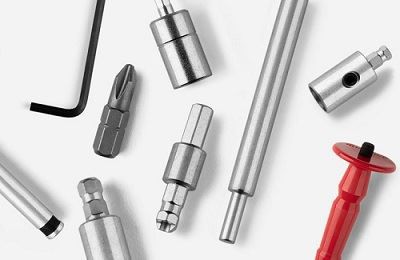
Tools and materials for door closer installation
Tool knife
Painter's tape
Pencil
Tape measure
Speed cube
Goggles
Gloves
Drill
Drill bit
#3 Phillips head or screwdriver
Hex key
Everything else you need will be included in the door closer kit. Most even come with a paper template that you can tape to the door for precise drilling locations without measuring.
How to install automatic door closers
Installing an automatic door closer may require more work than installing a set of hinges, but it's definitely a DIY-friendly job. The following instructions will help.
Step 1: Determine the direction of the door opening
There are several different ways to install automatic door closers, and you want to make sure you do it correctly. First, you need to determine the swing of the door, which you can do by standing on the door frame with the door open and your back against the hinges. If the door is on the right side, it is a right-swinging door. If the door is on the left, it is a left swing door.
After determining the swing of the door, choose on which side of the door you want to install the closer assembly. Often, you will want to hide the closer from the living space, so you will usually install it on the garage or room side of the door.

Step 2: Mark the hole locations
If your kit includes templates, there may be options for the left side door and the right side door. Find the template that fits the door, cut it out with a hobby knife, and follow the instructions to glue it to the door.
If your kit does not come with a template, follow the manufacturer's instructions to determine where to drill the holes. Be sure to measure from the hinge side of the door. Use a pencil to mark the distance of each set of holes from the hinges. Place the speed square on the top of the door and mark a vertical line at the two pencil marks. Use a tape measure or ruler on a square to mark the height of each hole on these vertical pencil lines.
Check the instructions to determine where to drill the holes in the door frame to attach the swingarm.
Tip: Laying out four holes with a tape measure and speed square may be difficult to do accurately. If you can mark two holes, you can drill additional holes for a perfect fit once the closer is in place.
Step 3: Drill the holes
Wear some safety glasses, and gloves are helpful if you drill through metal doors. Using a drill with a smaller bit, drill pilot holes through the marks you just made, then upgrade to the appropriate bit (usually 3/16, but check the instructions). Do not drill all the way through the door; a depth of ¾ inch is usually sufficient.
Step 4: Install the Door Closer Body
Most any type of door hardware uses a #3 Phillips bit, so screw a bit into the drill in this step. Using the screws in the kit, follow the instructions to bring the door closer to the door. Be sure to pay attention to the instructions so you know which way is up when installing the door closer.
Step 5: Install the Swing Arm Bracket
With the #3 Phillips bit still in the drill, attach the rear swingarm bracket to the door frame using the hardware included. For this part, it is sometimes easier to separate the arm from the door closer because the tension on the door closer makes it difficult to reach one of the holes.
Step 6: Attach the rocker arm to the door closer and make adjustments
If you have removed the rear swingarm from the door closer, it is time to reattach and adjust it to close properly. Check the orientation in the kit, but this usually means loosening the set screw on the arm and adjusting it so that the side post side of the rear swingarm is perpendicular to the side post.
Door closer installation is DIY friendly
Once you have adjusted the speed, install the cover and enjoy the fruits of your labor. You'll have a code-compliant door with much more adjustability than spring hinges. While each kit is slightly different, the installation procedure is nearly identical and well within the DIYer's capabilities. Simply measure, mark and drill the holes carefully and you can easily do the job yourself.