

As a reliable Automatic Swing Door supplier, I am often asked about how our products effectively prevent drafts. In this blog, I'll delve into the scientific principles and design features that make our automatic swing doors a great solution for blocking unwanted air infiltration.
Understanding Drafts
Before exploring how automatic swing doors prevent drafts, it's essential to understand what drafts are. Drafts are the movement of air into a building through unintentional or ill - sealed openings. They can be caused by a variety of factors, such as differences in air pressure between the inside and outside of a building, wind, and poor insulation. Drafts can lead to several problems, including increased energy costs, discomfort for building occupants, and potential damage to the building's interior due to moisture and temperature fluctuations.
Sealing Mechanisms in Automatic Swing Doors
One of the primary ways our automatic swing doors prevent drafts is through their advanced sealing mechanisms. Our doors are designed with high - quality gaskets and seals that create a tight barrier when the door is closed. These gaskets are typically made from materials like rubber or silicone, which are flexible enough to conform to the door frame and provide an airtight seal.
For example, the Wooden Door Use Automatic Concealed Door Closer YC - 60 is equipped with a specially designed gasket system. The concealed door closer not only ensures smooth and quiet operation but also helps maintain the integrity of the seal. The gasket is placed along the edges of the door, including the top, sides, and bottom. When the door closes, the gasket is compressed against the door frame, effectively blocking the passage of air.
The bottom seal is particularly important in preventing drafts. Cold air can easily enter a building through the gap between the bottom of the door and the floor. Our doors are fitted with bottom sweeps or automatic drop seals. The automatic drop seals are designed to descend when the door closes, creating a tight seal against the floor. This feature is especially useful in areas with uneven floors or where there is a significant difference in air pressure between the inside and outside.
Insulation Properties
In addition to sealing mechanisms, the insulation properties of our automatic swing doors play a crucial role in preventing drafts. We use high - quality insulation materials in the construction of our doors to reduce heat transfer and air movement. For instance, some of our doors have a core filled with insulating foam. This foam not only provides excellent thermal insulation but also helps to dampen sound.

The Latest Design Automatic Swing Door Opener CD - 68 is installed on doors that are designed with superior insulation. The door panels are engineered to have a low U - value, which is a measure of how well a material conducts heat. A lower U - value indicates better insulation, meaning that less heat is transferred through the door. This helps to maintain a stable indoor temperature and reduces the need for excessive heating or cooling, thereby saving energy and preventing drafts.
Air Pressure Regulation
Our automatic swing doors are also designed to regulate air pressure, which is another important factor in preventing drafts. When a door opens and closes, it can disrupt the air pressure balance inside and outside the building. This disruption can cause air to rush in or out, leading to drafts.
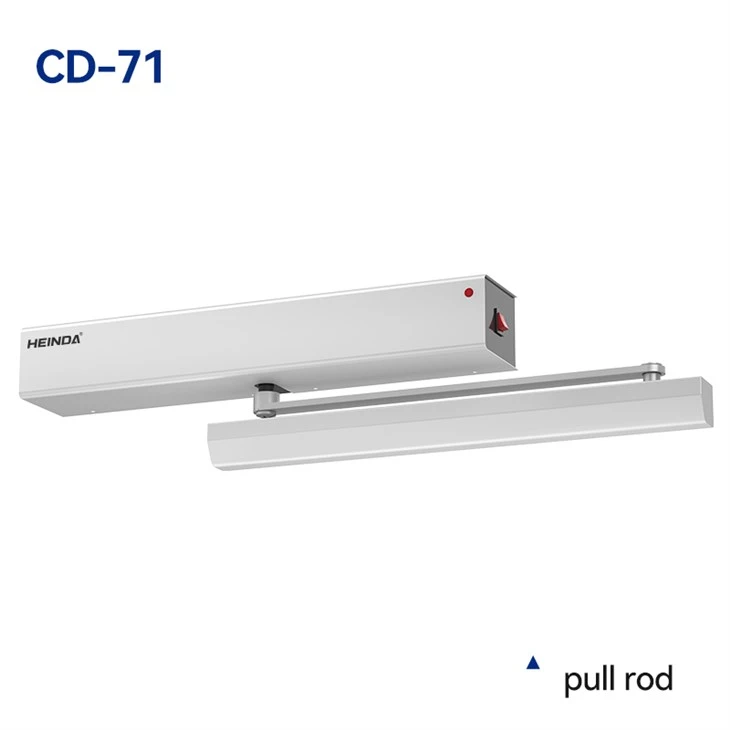
To address this issue, our doors are equipped with intelligent sensors and control systems. These systems can detect changes in air pressure and adjust the operation of the door accordingly. For example, the DC Brushless Motor Intelligent Automatic Swing Door Opener CD - 71 uses advanced algorithms to optimize the door's opening and closing speed based on the air pressure conditions. If there is a strong wind outside, the door opener can slow down the opening process to minimize the impact of the wind on the indoor air pressure.
Automatic Closing and Safety Features
The automatic closing feature of our swing doors is not only convenient but also essential for preventing drafts. Once a person passes through the door, it closes automatically, ensuring that the seal is maintained at all times. Our doors are equipped with reliable door closers that can be adjusted to control the closing speed and force.
Moreover, safety features such as sensors that detect obstacles also contribute to draft prevention. If an object is detected in the door's path, the door will stop closing and then reopen. This prevents damage to the door and ensures that the door can close properly and form a tight seal after the obstruction is removed.
Energy Savings and Environmental Benefits
By effectively preventing drafts, our automatic swing doors offer significant energy savings. With less air infiltration, the heating and cooling systems in a building don't have to work as hard to maintain a comfortable indoor temperature. This can lead to lower energy bills and a reduced carbon footprint.
In commercial buildings, where the doors are constantly in use, the energy savings can be substantial. Studies have shown that well - sealed automatic swing doors can reduce energy consumption for heating and cooling by up to 30%. This not only benefits the building owner in terms of cost savings but also contributes to a more sustainable environment.
Contact Us for Purchase and Negotiation
If you are interested in our automatic swing doors and want to learn more about how they can prevent drafts in your building, we are here to help. Whether you need a door for a commercial building, a residential property, or an industrial facility, our team of experts can provide you with the right solution. Contact us for a detailed consultation and let's discuss how we can meet your specific requirements.
References
- ASHRAE Handbook – Fundamentals, American Society of Heating, Refrigerating and Air - Conditioning Engineers, 2019.
- Building Energy Codes Program, U.S. Department of Energy, 2020.
- Kittler, P., & Morys, R. (2018). Energy - efficient building envelopes: A review of insulation materials and systems. Energy and Buildings, Volume 173, pages 464 - 476.